Weight during longer treatment
A target has a moment of arrival. A life also has the stretch of time that comes afterward.
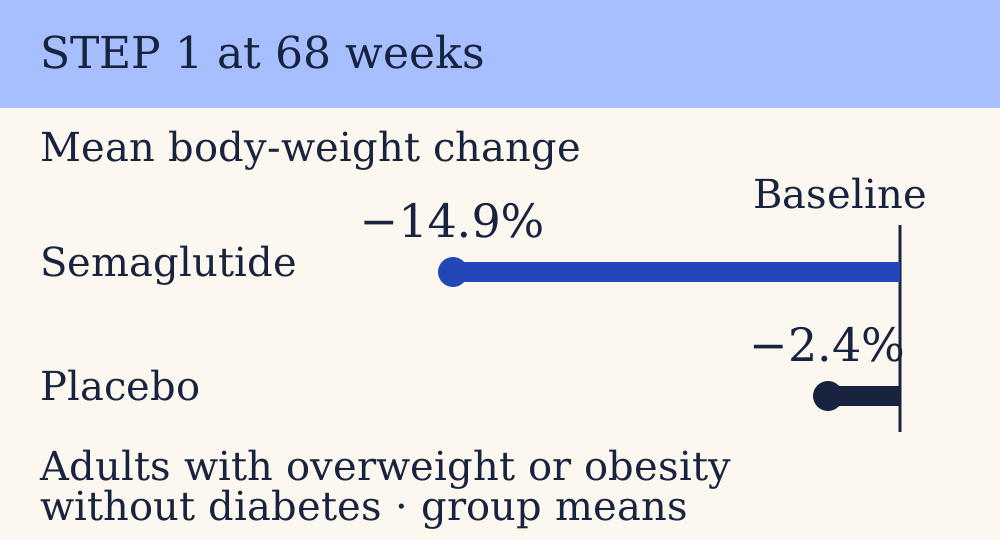
STEP 1 weight change
The STEP 1 randomized trial enrolled 1,961 adults with overweight or obesity without diabetes. At 68 weeks, mean body-weight change was −14.9% with semaglutide versus −2.4% with placebo.
I understand this ending’s appeal. A specified treatment period, a clear comparison, a substantial average change: it gives the story a satisfying shape. The people involved, however, have futures beyond the point where a particular result becomes available.
The finish-line version of a health goal tries my patience. It can make the moment of reaching a weight seem like the whole purpose of treatment. I favour an ambition that includes living with the change, whatever that later experience turns out to be.
STEP 5 at 104 weeks
The STEP 5 trial reported sustained weight reduction over 104 weeks with semaglutide, significantly greater than placebo in adults with overweight or obesity. The longer period of treatment makes this a useful companion to the earlier weight result.
The word sustained earns its place here because the study observed continued treatment over that interval. I would feel uncomfortable stretching the finding into a claim about every year ahead, or borrowing it to describe what happens once treatment ends. The duration and the treatment circumstance carry the actual information.
That limit leaves the finding substantial. A longer observation answers something that a shorter one cannot: whether weight reduction is sustained during that longer period of treatment. It gives the future more space in the evidence without pretending to fill it completely.
The maintenance question
My most personal question about a goal concerns its imagined duration. A number reached briefly and a change lived with for a long time would have different meanings. Those are possible ambitions a person might bring to the result, rather than additional outcomes being claimed for these trials.
Neither study supplies a personal continuation or stopping plan that I could extract here. A group result leaves personal circumstances to be considered elsewhere. A modest conclusion follows: treatment duration deserves a place in the question from the beginning, alongside the amount of change.
The appetite experiments concern a biological explanation, and the cardiovascular trials concern particular medical histories. This longer view supplies another dimension of the person: the life they hope will follow the headline result.